Report | The School Librarian
Tags: ReportApril 1, 2025
A report on the inaugural FOSIL 2025 Symposium for The School Librarian (Volume 73, Number 2, 2025), the Quarterly Journal of the UK School Library Association.
Read the report below or download as PDF.
The Symposium was held online, was open and free to attend, and was recorded. The proceeding are openly and freely available in a dedicated sub-Forum, as is a playlist of recordings.
—
The inaugural FOSIL 2025 Symposium—Engaging and Empowering Inquirers—on Saturday 8 February, which was free and online, drew together more than 200 colleagues from over 25 countries, with half from the UK. Thanks to Elizabeth Hutchinson for hosting and Jenny Toerien for assisting.
The programme was as rich as it was varied. Dianne Oberg, Professor Emerita at the University of Alberta (Canada) opened proceedings. Key takeaway: Inquiry, like anything meaningful and worthwhile, takes time. Joanne Bleby and Lee FitzGerald from Loreto Kirribilli (Australia) shared about collaboration between teachers and librarians, with a focus on History. Key takeaway: Inquiry is good for exam results, but also the acquisition of knowledge and understanding, and students realising their full potential as human beings. Mary-Rose Grieve from Hartland International School shared inspiration from Artificial Intelligence, by David Biedrzycki. Key takeaway: “We shall not cease from exploration and the end of all our exploring will be to arrive where we started and know the place for the first time.” (T. S. Eliot, Little Gidding). Ruth Maloney from Tonbridge Grammar School shared about integrating skills into an inquiry process. Key takeaway: FOSIL provides a unifying vocabulary that facilitates purposeful collaboration between teachers and librarians. Jannath Khanom from Connaught School for Girls shared about introducing inquiry through the literacy curriculum. Key takeaway: Lead by example and ensure all work is shared with line managers. David Harrow, Faye Marland and Nick O’Loughlin from AKS Lytham shared about celebrating students as inquirers. Key takeaway: Don’t forget the joy in/ of learning. Barbara Stripling, Professor Emerita at Syracuse University (America) closed proceedings with a reflection on how much revolutionary progress we have made, with much yet to be done. Key takeaway: It’s on us—we have to be the revolutionary leaders our students need.
The Symposium proceedings are freely available at tinyurl.com/FOSILForum2025, with a YouTube playlist of recordings at tinyurl.com/FOSIL2025.
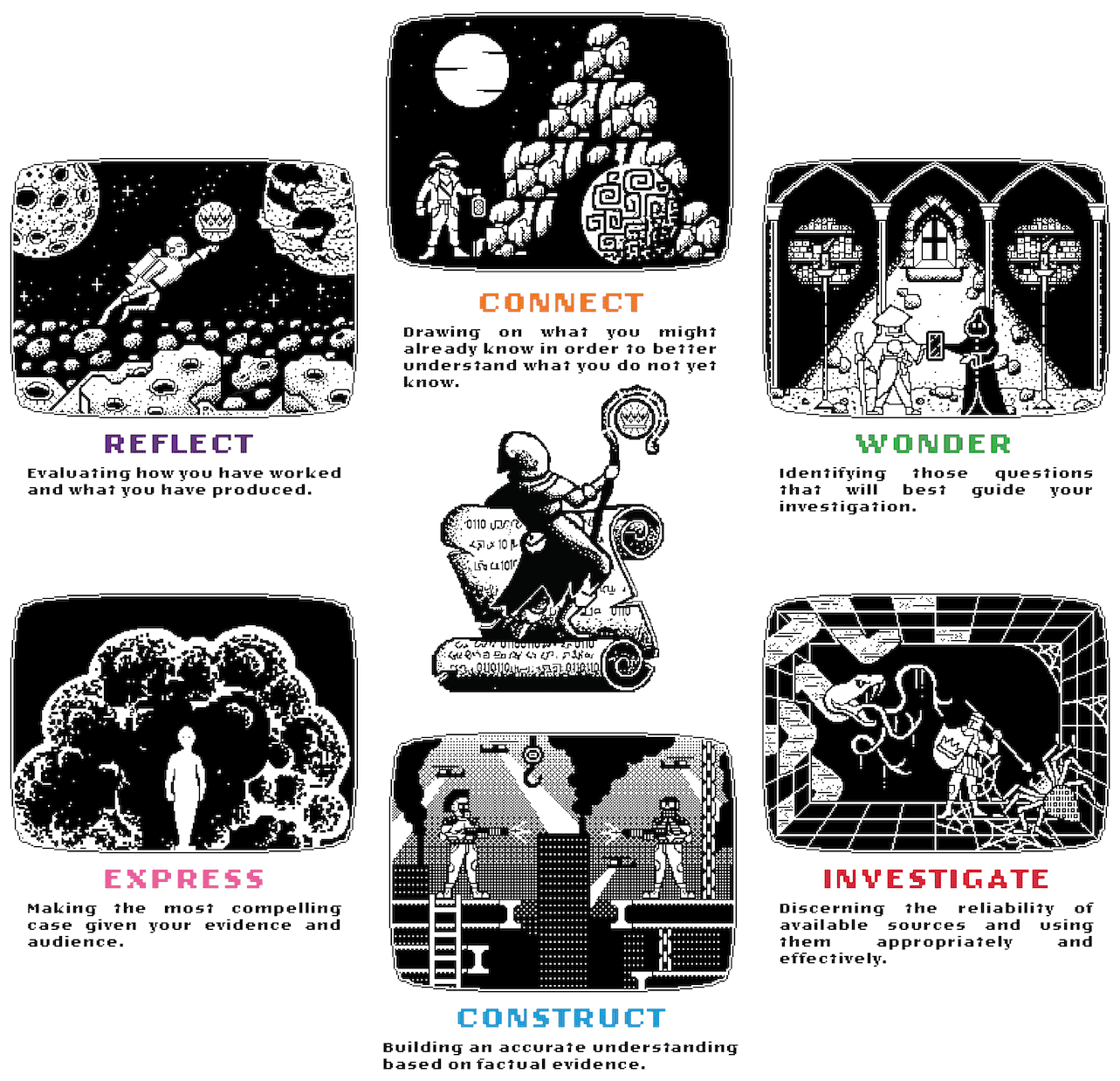
Three major FOSIL developments were also announced during the Symposium. Firstly, Barbara Stripling and I are writing a book for Bloomsbury Libraries Unlimited—Teaching Inquiry as Conversation: Bringing Wonder to Life. Since 2020, we have been meeting weekly, and the book is an exciting opportunity to draw our work more closely together and develop important aspects of it further. Secondly, the foundation of the independent Institute for the Advancement of Inquiry (IAI), which I am honoured to direct, the purpose of which is to initiate and support efforts that foster the development of school-age children as engaged and empowered inquirers. The IAI has been endorsed by the President of IASL and the Chair of the IFLA School Libraries Section, among others. Thirdly, the Creative Commons release of the rebooted Heroic Inquiry Cycle. Inquiry is a learning process that is embodied, meaning it has cognitive and meta-cognitive, emotional, social and cultural dimensions. Heroic Inquiry makes this explicit by aligning stages of the FOSIL Inquiry Cycle with stages in the Hero’s Journey, and is an invitation for colleagues to adopt or adapt as necessary.
—

Login | Register or fill out the form below to comment as a guest