Thanks, Elizabeth and Alyssa.
I have taken the liberty of moving this topic to this Forum, because it addresses broader concerns raised here, and while the Topics in this Forum have not been updated in some time, they may still be useful.
I have found it helpful to have the following engineering adage in mind: a system is perfectly designed to achieve the results it gives you.
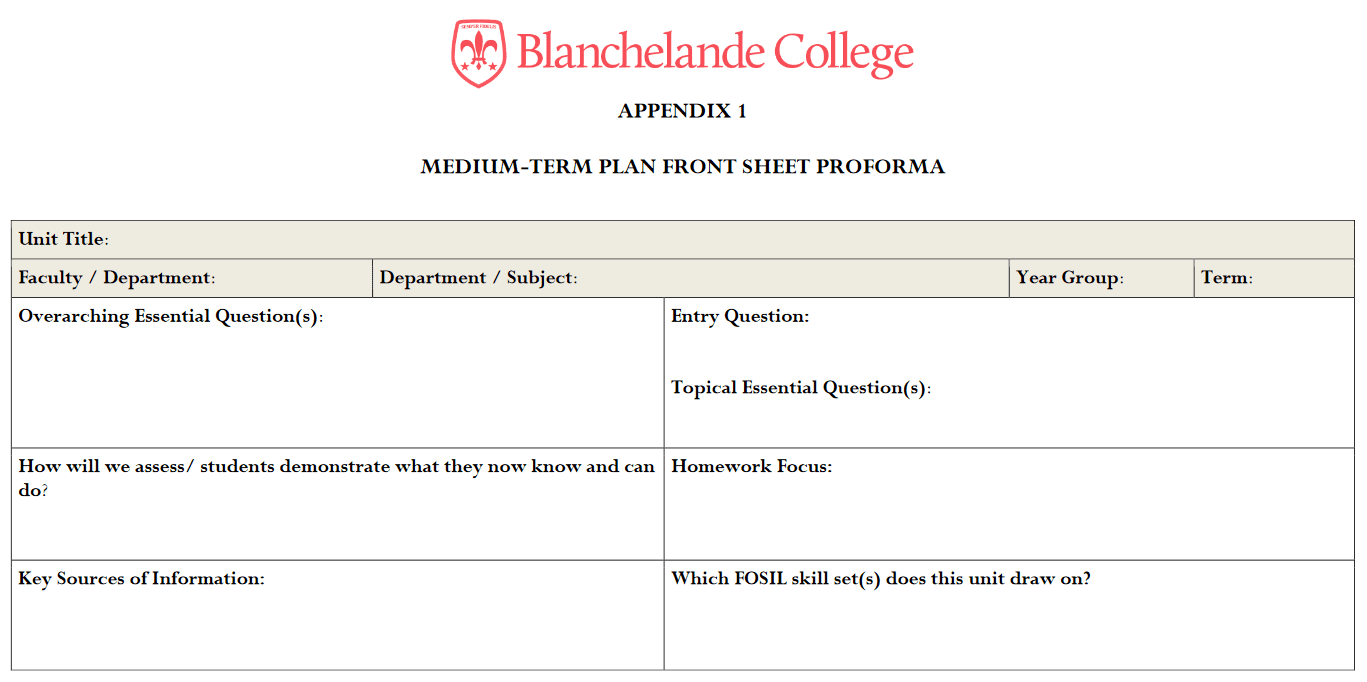
This is helpful because it allows us to step back and consider the incentives and support for engagement with FOSIL as Professional Development (PD), as well as disincentives and obstacles. In our school, for example, engagement with FOSIL is built into our medium term / unit plan (see below), and reflection on that engagement into our appraisal process. This, in turn, requires in-service education and training (INSET), which we deliver through new staff induction and INSET days, examples of which may be found in FOSIL Presentations. While this does not automatically mean that all colleagues are equally interested and/ or engaged, or automatically solve practical problems like lack of time and personalised support, it does lay a solid foundation for an enabling inquiry environment in which colleagues can encourage and support each other to become more engaged and empowered inquirers themselves.
I have elsewhere made reference to the Developing Inquiring Communities in Education Project (DICEP). If you can get hold of a copy of Action, talk & text: Learning and teaching through inquiry (Wells, 2001), I recommend that you do, as the whole book addresses this question. If not, Action, talk and text: The case for dialogic inquiry by Gordon Wells (PDF download), which is based on Chapters 1 and 10, may be helpful.
—

 Privacy Policy